
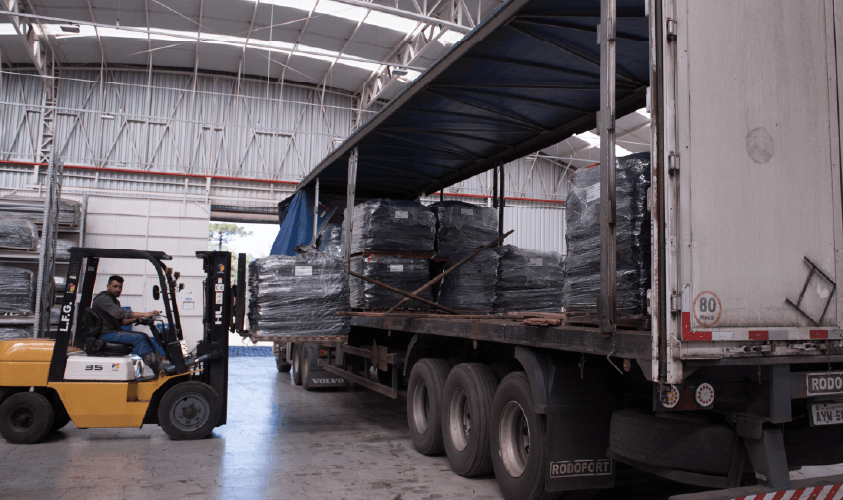
Brazilian leather has gained global relevance for its quality, consistency and commitment to responsible production practices. The strength of the sector reflects an industrial ecosystem that combines an abundance of raw materials, a tradition in tanning and continuous technological innovation.
According to the Center for the Brazilian Tanning Industry (CICB), the country exports leather to more than 80 destinations, with a turnover of US$ 1.26 billion in 2024. This performance keeps Brazil among the world's top five exporters, alongside traditional powers such as Italy and the United States.
The success of the Brazilian leather supplier is directly linked to the scale of national livestock farming, the logistics structure and the technical qualifications of the industries. In addition, international environmental requirements have driven the advance of sustainable practices and recognized certifications, such as the Leather Working Group (LWG), which gives credibility and competitiveness to Brazilian production.
Here's how the country has established itself as a global benchmark and why companies like Durli Leathers translate national excellence into premium, traceable and sustainable sourcing.
A production base that sustains world leadership
The leather chain begins in the countryside, and few countries have a livestock base as broad as Brazil's. According to ABIEC (Brazilian Association of Meat Exporters), Brazil is home to approximately 230 million cattle, the second largest herd on the planet, behind only India.
This availability ensures continuous and diversified raw materials. The Nelore, Angus, Guzerá and Girolando breeds, among others, offer skins with different characteristics. The Nelore, predominant in the Midwest and Southeast, guarantees resistance and firm fibers; the Angus, common in the South, has a fine texture and a soft touch, valued by the automotive and furniture industries.
Studies by Embrapa Gado de Corte show that proper handling and parasite control reduce losses in raw leather quality by up to 20%. In addition, animal welfare policies and traceability from the farm guarantee ethical and controlled origins - a growing demand from major international buyers.
The strong integration between fields, slaughterhouses and tanneries forms a consolidated chain, capable of meeting global technical and health standards, an essential element for the competitiveness of Brazilian leather.
Exports in numbers: the global strength of Brazilian leather
Export performance confirms the sector's importance. In 2024, according to a CICB report, Brazil exported 173 million m² of leather, generating US$1.26 billion in revenue - an increase of 12.5% compared to 2023.
The main destinations were China (34%), Italy (14%), the United States (10%), Vietnam (8%) and Mexico (5%). This distribution reveals the country's importance both for Asian industrial supply and for the European premium goods market.
The national chain exports different stages of leather:
- Wet Blue - base material, widely used in Europe and Asia for further finishing;
- Semi-finished leather (Crust) - intermediate stage, valued by automotive and furniture manufacturers;
- Finished Leather - final product with color, feel and resistance ready for application in shoes, cars and furniture.
The diversity of products and consistency of delivery reinforce global confidence in the Brazilian supplier, which is capable of meeting complex technical and regulatory specifications.
Brazilian leather's competitive edge
Brazil's competitiveness is the result of a combination of scale, quality and social and environmental responsibility.
1. Availability and integrated logistics
The wide network of slaughterhouses and tanneries guarantees a constant supply and competitive logistics costs. The main producing regions, Rio Grande do Sul, São Paulo, Mato Grosso do Sul, Goiás and Bahia, have a concentrated infrastructure for slaughtering, tanning and efficient transportation to ports such as Santos and Rio Grande.
2. Internationally recognized quality
Brazilian leather is prized for its uniformity, mechanical resistance and excellent finish.
According to the International Leather Maker (ILM), the country is among the largest exporters of leather for the automotive sector, with a high approval rate in performance and safety audits.
3. Sustainability and certifications
The Leather Working Group (LWG) certifies tanneries that reduce their consumption of water, energy and chemicals. In 2025, Brazil surpassed the mark of 50 certified tanneries, including units with a Gold level, the highest.
In addition, standards such as ISO 9001 and IATF 16949 ensure the quality of management and standardization required by automakers and luxury brands.
4. Technological innovation
In recent years, Brazilian tanneries have invested in biotechnology, veg-tan tanning and the use of bio-based zeolites, alternatives free of metals and bisphenols, in line with European regulations (REACH and CEN/TC 411). This modernization reinforces the country's commitment to clean and traceable production.
Brazilian leather: versatility and application in the main sectors
Brazilian leather supplies industrial segments that demand high technical standards.
Furniture sector
Recognized for its aesthetics and durability, Brazilian leather is widely used in sofas, armchairs and premium furniture. According to Abimóvel, around 40% of upholstered furniture exported from Brazil uses Brazilian leather. The material adds thermal comfort, longevity and a sophisticated finish.
Automotive sector
Global automakers choose Brazilian leather for its resistance, flexibility and dimensional stability. Compliance with international standards and certifications such as IATF 16949 guarantee safety and performance for seats and vehicle interiors.
Footwear sector
A traditional consumer of Brazilian leather, the footwear sector accounts for part of domestic demand and exports. The texture, elasticity and resistance of the Brazilian material are differentials in footwear lines.
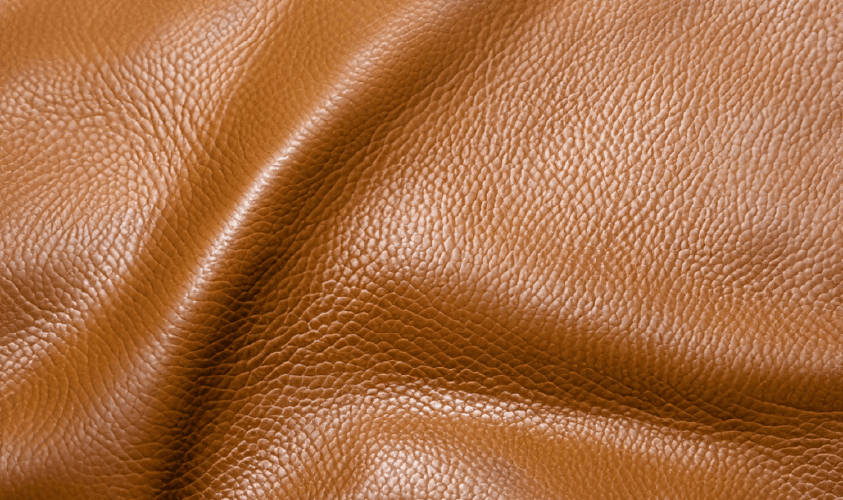
Durli Leathers: Brazilian excellence recognized worldwide
Among the leaders in the sector, Durli is an example of the competitiveness and innovation of the national industry. Founded in 1960, the company is today the second largest leather exporter in Latin America, with consolidated supplies to Europe, Asia and the United States.
It also has a production capacity of over 8 million hides a year and a network of ten industrial units in Brazil, Paraguay and Mexico. This structure guarantees flexibility and large-scale customer service.
All the plants have LWG Gold certification, as well as ISO 9001 and IATF 16949 in key plants, confirming standards of quality, traceability and environmental control. The company's own individual code system allows each skin to be traced from the farm to the end customer, reinforcing the transparency of the chain.
The company operates in three main lines, wet blue, semi-finished and finished leather, serving different segments with customization of color, touch and performance. Durli's commitment to ESG practices and technological innovation reinforces the image of Brazilian leather as a global benchmark in responsibility and industrial excellence.
Final thoughts on a legacy that combines tradition and innovation
The history of Brazilian leather is also a history of adaptation and industrial progress. From traditional craftsmanship to modern automated plants, the country has transformed an indirect result of livestock farming into a material with high added value and global economic importance.
With its solid structure and ongoing commitment to innovation, the Brazilian leather supplier will continue to be a leading player in sustainable, high-performance solutions.
Durli Leathers embodies this legacy, a balance between tradition, innovation and responsibility that keeps Brazil among the leading names in the sector.
Get in touch and find out how our leather can meet your supply needs on a global scale.
References and sources:
- CICB - Exports 2024/2025: reports and dashboards with destinations, values and product mix(CICB)
- ApexBrasil / Brazilian Leather: 2024 balance sheet and analysis of growth in value, area and weight(ApexBrasil)
- Embrapa and technical literature: herd, management and quality of skins; impacts on wet blue.(Infoteca Embrapa)
- Leather Working Group: scope and criteria for environmental audits for tanneries.
- Durli Leathers: capacity, certifications and traceability with QR code; international cases. (Durli Leathers)