
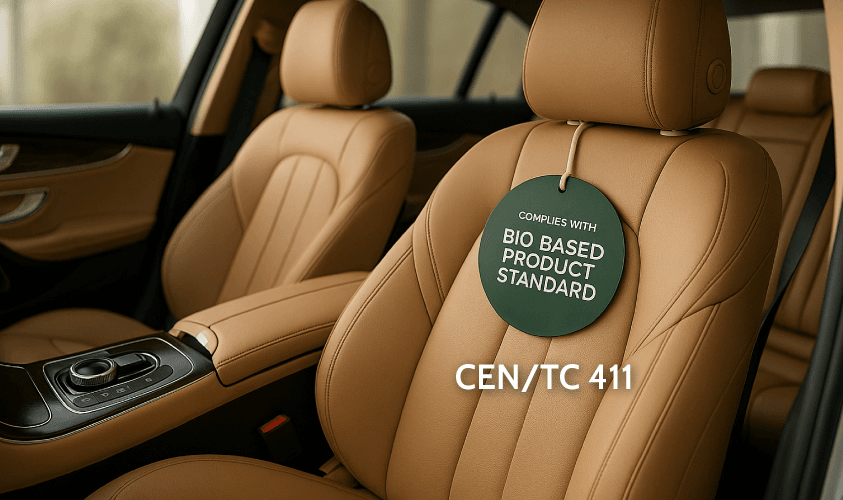
A historic milestone for the leather industry
Leather has been officially recognized as a bio-based material by the European standard CEN/TC 411. This is a significant achievement for a sector that in recent years has been the subject of intense debate about sustainability and synthetic alternatives.
For a long time, products of plastic origin were promoted as "vegan leather" or "ecological leather", confusing consumers and creating risks of greenwashing for brands seeking to position themselves in a sustainable way. Now, with regulatory recognition, automotive OEMs, footwear, furniture and artifact manufacturers can clearly state: leather is the premium and proven sustainable choice.
For Durli Leathersthis decision represents the validation of practices that the company has already adopted for decades: complete traceability, international certifications, strict environmental management and supply on a global scale.
What CEN/TC 411 means
CEN/TC 411 is a set of European Union standards that define technical and sustainability criteria for bio-based materials. Its main pillars include:
- EN 16575: harmonized vocabulary for bio-based products;
- EN 16640: method for measuring biogenic carbon content;
- EN 16751: sustainability criteria;
- EN 16848: B2B communication requirements.
In practice, this offers the market transparency, standardization and regulatory certainty. OEMs and brands can specify leather with the guarantee that its renewable content is proven and auditable. This reality is capable of strengthening ESG reports and eliminating doubts about fossil imitations.
Because recognition matters
In the automotive sector, interiors are increasingly being looked at from a sustainability perspective. Regulators and consumers demand clarity, authenticity and concrete proof. The same is true in sectors such as footwear and furniture, where the longevity of the material and its origin have become decisive purchasing criteria.
With CEN/TC 411, leather now has an authentic, defensible sustainability narrative in line with global expectations. This allows brands to put aside doubts and move forward confidently on their sustainability path, without giving up the premium quality that leather has always represented.
The tradition, scale and responsibility that makes Durli Leathers stand out on the global market
The recognition of leather as a bio-based material comes as no surprise to companies that have already structured their production on a sustainable basis. A Durli Leatherswith 64 years of history, sees this milestone as the validation of a path it has always followed: transforming a by-product of the food chain into a material with high added value, while respecting the environment, the communities involved and the strictest global standards.
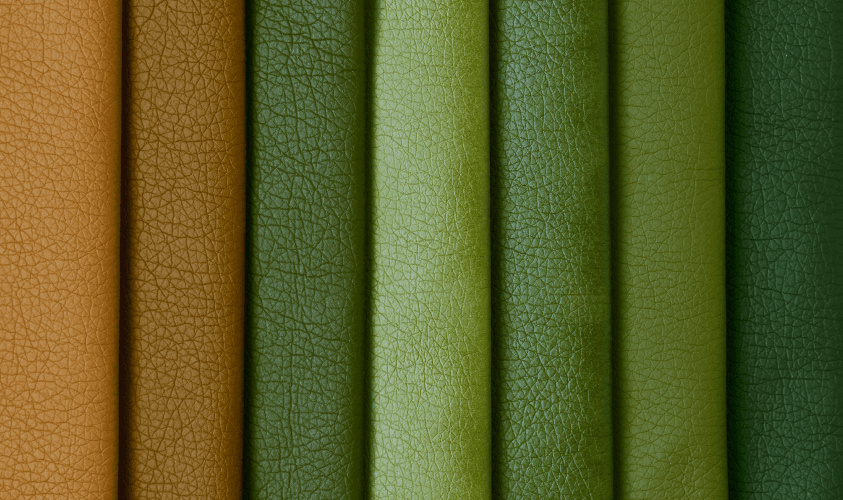
Sustainable production and traceability
Durli Leathers bases its operations on three fundamental principles, which relate directly to the central theme of this article:
- Responsible sourcing - the raw material is monitored from the farm, with geomonitoring and purchased according to the strict criteria of its Responsible Purchasing Policy, ensuring deforestation-free chains.
- Efficient environmental management - rational use of water and energy, control of emissions, comprehensive treatment of effluents and waste.
- Individual traceability - each hide is identified and monitored throughout the process, offering end-to-end transparency.
These practices position Durli leather as a concrete example of what it means to be a bio-based, renewable and sustainable material.
Find out more at: Durli Leathers Sustainability
Certifications that strengthen credibility
All Durli Leathers units have an LWG Gold rating (Leather Working Group), the highest category awarded by one of the most relevant sustainability protocols in the sector.
In addition, the company is certified to ISO 9001, which guarantees quality standardization, IATF 16949 and is a member of Leather Naturally, a global association that promotes the responsible use of leather.
These certifications are not just seals, but guarantees that allow customers to trust a supplier that operates with auditable processes and in compliance with international requirements.
Leather as part of the circular economy
CEN/TC 411 makes official what the chain already knew: leather is part of the circular economy. It avoids the improper disposal of millions of hides in the food industry and extends the life cycle of the products in which it is used.
At Durli Leathers, this concept translates into practice: Durli Leathers that last for generations, that can be repaired, reused and recycled. At the end of their useful life, they are also biodegradable, returning to the environment without generating toxic waste.
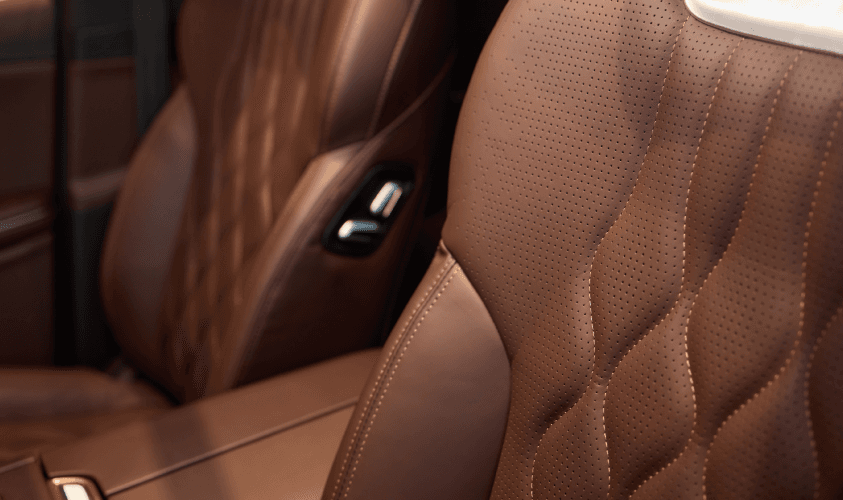
Read also: Leather is essential for the circular economy
Comparison: natural leather vs. synthetics
| Criteria | Natural leatherDurli Leathers) | Synthetics (PU/PVC) |
| Material base | Bio-based, renewable by-product | Fossil derivatives (plastics) |
| Durability | High, repairable, long life cycle | Low, peeling, frequent replacement |
| Circularity | Reuse of livestock waste | Carbon-intensive production |
| Microplastics | Does not release | Releases plastic fibers |
| Certifications | LWG Gold, ISO 9001,IATF 16949 | Little regulation |
This comparison shows why leather remains the most legitimate option for combining sustainability, performance and authenticity.
Check it out: Life cycle: natural leather vs. synthetic leather
The environmental impact of imitations
The advance of fast fashion has popularized plastic materials as alternatives to leather. However, their large-scale production, derived from petroleum, seriously compromises sustainability.
- Limited life cycle: they are short-lived, requiring constant replacement.
- Slow decomposition: they can take up to 500 years, releasing microplastics that pollute both the soil and the oceans.
- Lack of transparency: marketed as "synthetic leather", they cause consumer confusion.
Read more: Leather and reducing marine pollution
Why choose Durli Leathers
Durli Leathers offers OEMs, footwear brands, furniture and artifacts:
- International regulatory compliance - CEN/TC 411, REACH, LWG, ISO 9001 and IATF 16949.
- Global scale - daily production of over 27,000 skins.
- Individual traceability - geomonitoring of direct and indirect suppliers and leather-by-leather identification.
- Technical customization - tailor-made solutions in Wet Blue, Crust and Finished.
- Track record of legitimate sustainability - consistent practices that stand up to market scrutiny.
Final considerations
The official recognition of leather as a bio-based material reinforces what Durli Leathers practices on a daily basis: producing leather sustainably, traceably and in accordance with the strictest international standards.
With all its LWG Gold certified units, pioneering individual traceability and responsible sourcing practices, Durli Leathers transforms a by-product of the food chain into a noble, durable and biodegradable material that integrates the circular economy and meets growing demands for transparency and authenticity.
For OEMs, footwear, furniture and artifact manufacturers, this regulatory decision removes doubts and confirms: leather is the premium and proven sustainable choice.
Contact Durli Leathers and see how our solutions in Wet Blue, Semi-Finished (Crust) and Finished Leather can add value to your business, combining performance, aesthetics and environmental legitimacy.
Sources and references:
- One4Leather
- Sustainability
- Life cycle: natural leather vs. synthetic leather
- Leather and reducing marine pollution
- Leather is essential for the circular economy
- The role of leather in the circular economy